
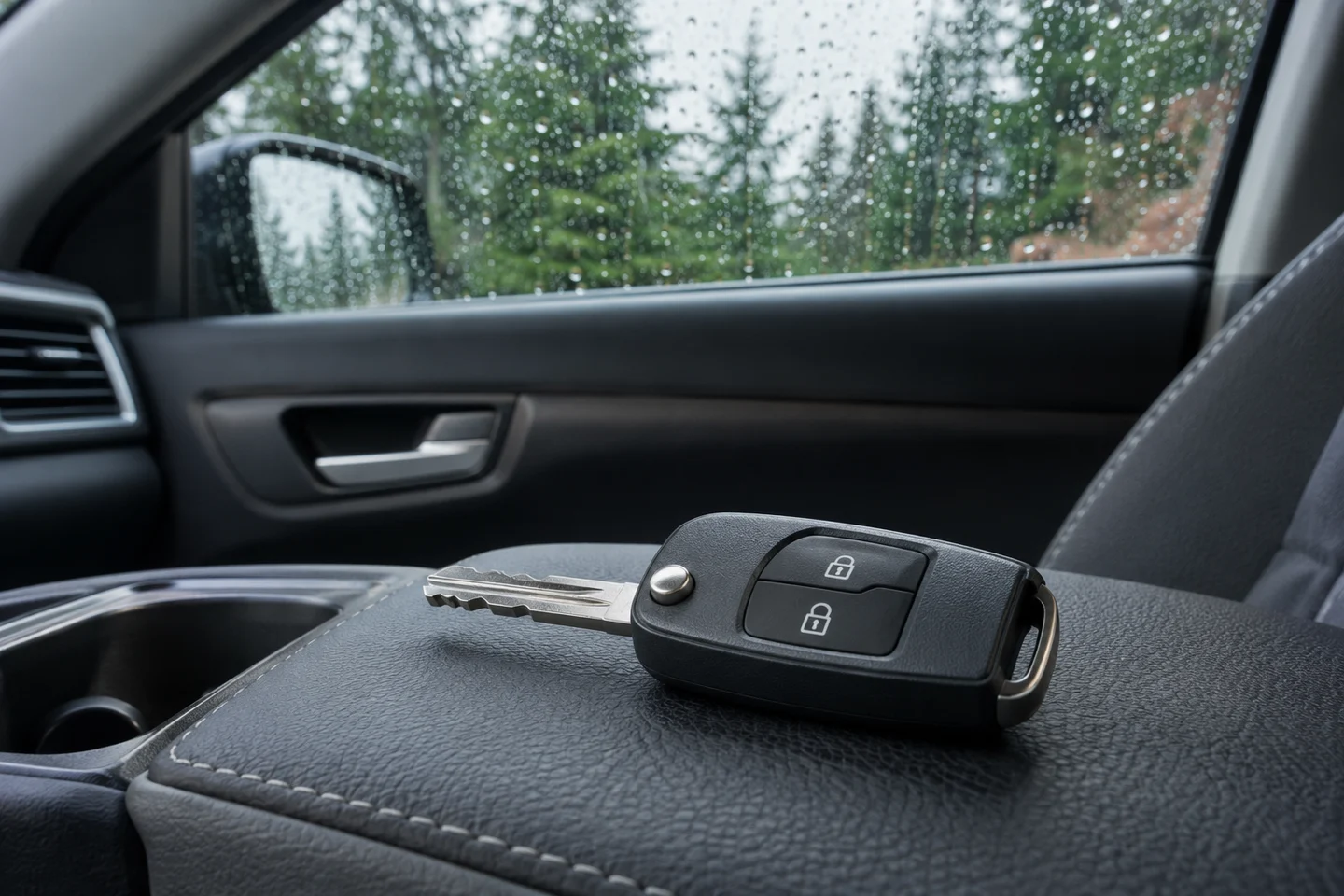
One working key is useful information.
If you still have a key that starts the car, you may be arranging a spare. If all working keys are gone, the process can change. Mention the difference at the start, along with the year, make and model. Availability of the correct part also matters.
Do not choose by the buttons alone.
The shape of the case is not a reliable compatibility check. Similar-looking fobs may contain different electronics. If you have already bought a part online, keep the listing, part number and packaging so it can be assessed before you pay for more work.
Compare like with like.
Ask whether the quote covers the key itself, blade cutting and any programming needed. Check what happens to a missing key's access, where that is supported. Include travel or other charges in the comparison rather than treating a part-only price as the completed job.
Try the functions you agreed on.
Before the visit ends, check starting, remote locking and the mechanical key where fitted. Put a spare somewhere separate from the everyday key. If the problem is access to the car rather than a missing key, start with car lockout help.
Three functions can sit in one small case.
The metal blade may provide mechanical access. An electronic chip or smart-key system can be involved in allowing the vehicle to start. The remote buttons may lock and unlock it. Not every vehicle combines those functions in the same way, so a key that succeeds at one task can still fail at another.
When comparing options, name the functions you need. A replacement shell is not the same as a complete electronic key, and a cut blade is not automatically ready to start a vehicle that requires programming. Have the vehicle details checked against the proposed part.
A lost key is also an access decision.
Ask what can be done about the missing key on your particular vehicle. Where supported, removing a key from electronic authorization and changing a mechanical lock are different things. Do not assume that programming a new remote prevents every function of the old one.
The appropriate choice depends on the vehicle, the lost key and the work supported. Explain whether a key is simply unavailable, damaged, or lost somewhere it might be linked to the car. Keep that discussion separate from the basic question of producing a working replacement.
A spare is easier to understand before you need it.
If you are ordering a second key, bring the working one and compare every agreed function before the job ends. Keep the spare in a separate place. A second fob in the same bag as the first may not help when the whole bag goes missing.