
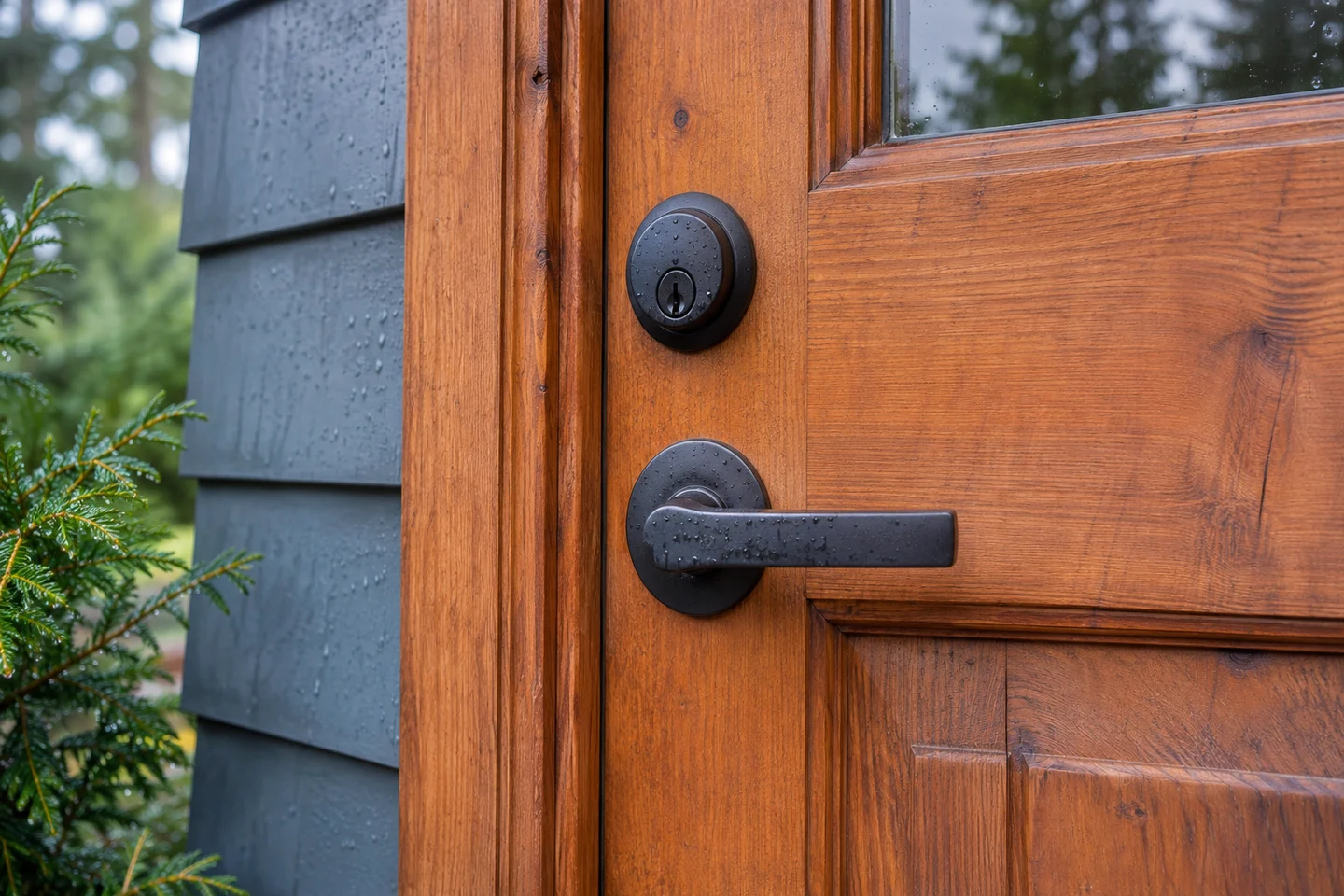
Walk through your ordinary routine.
Which entrance do you use with shopping bags? Which one do the children use? Is there a separate door from the garage? A useful lock setup starts with the people coming and going, rather than a list of extra features.
Keep hardware that still suits the door.
If the concern is an old spare key, rekeying suitable cylinders may be enough. If the handle is loose or the bolt catches, assess that fault too. Changing the key combination will not bring a badly aligned door back into position.
A keypad changes the routine, too.
Codes, batteries and backup access become part of using an electronic lock. Before choosing one, check the door preparation, how it operates from inside, and how access would work if the battery runs down. A familiar mechanical lock can still be a sensible choice.
Make a small list after a move.
Homes around Angle Lake and McMicken Heights have their own combinations of doors and access points. List yours, including the garage-to-house door. Then review remotes and codes separately with our moving-in guide. You do not have to replace everything at once.
A new lock should suit the whole entrance.
The finish is easy to compare in a shop or online. The existing holes, door thickness, frame condition and way the door opens are less obvious, but they matter to the fit. Keep the model details of any hardware you have already bought rather than assuming it will replace what is there.
Think about daily use as well. A household member carrying shopping, a person who finds a small turnpiece difficult, and someone who often forgets a key may prefer different features. Explain those needs before settling on a handle or electronic lock.
After the keys change hands.
A move is a useful time to make a simple key list: which keys were supplied, what they open and who needs a spare. Do not assume an old owner collected every copy. At the same time, a worn handle does not become sound simply because its cylinder accepts a new key.
Separate the immediate access change from improvements you can plan later. You might keep suitable hardware, address a sticking door and review a keypad as three different decisions. In a rented or managed property, establish who can approve each change before the work starts.
Check the entrance as you would normally use it.
After any work, check the agreed keys, the inside operation and the way the door latches when closed. A demonstration with the door standing open does not tell you everything about how it meets the frame. Keep the hardware and warranty details with your home records.