
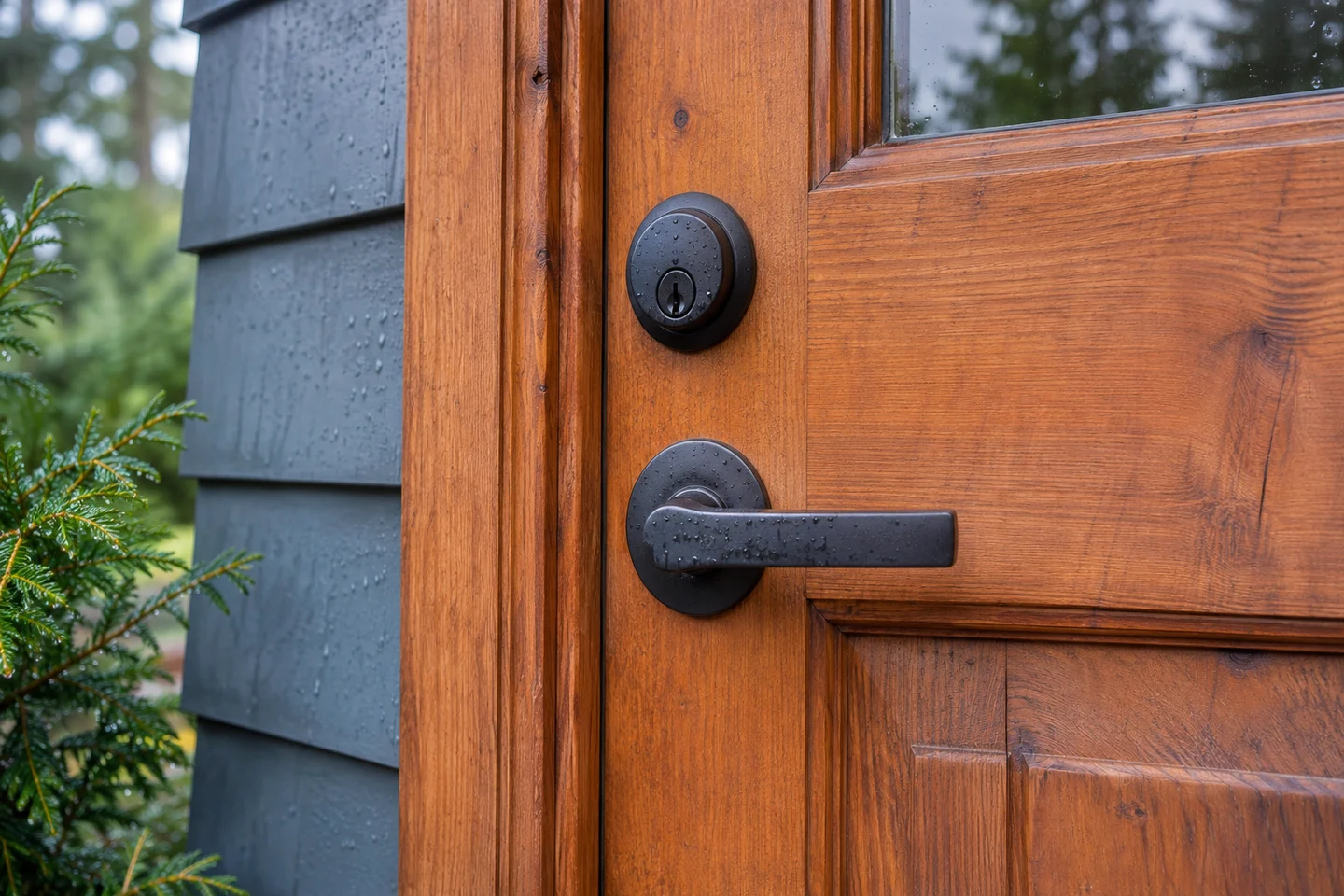
Compare open and closed.
If you can safely use the door, note whether the bolt operates differently when it is open and when it is closed. A bolt that moves freely in one position may be meeting resistance at the frame. This is an observation to share, not a diagnosis or an invitation to force it.
Describe the change.
Did the trouble build up over time? Did it start after the door was hit or the handle became loose? Does the spare key behave the same way? A short account of what happened is often more useful than choosing a replacement from a photograph.
The door and lock need to agree.
A latch, bolt and strike plate each have a role. Replacing a cylinder alone may not solve a closing problem. Equally, a key that no longer turns needs assessment beyond simply pushing the door harder. Ask what the proposed repair is intended to correct.
Keep the decision proportionate.
Some components can be repaired or replaced individually; others are worn or unsuitable for continued use. If you also need to change access, discuss rekeying at the same time. For a door you can no longer open, use the emergency entry page to describe the situation.
One bad key can look like a bad lock.
A key that has worn, bent or been poorly copied may behave differently from a sound spare. If you already have another key, describe whether both behave the same way. Do not keep twisting a key that feels as though it may bend or break.
A comparison is a clue, not a complete test of the mechanism. The cylinder, bolt, handle and fit of the door still need to be considered. Keep any broken piece for assessment and explain whether the door can still be opened and secured.
Repair or replace?
A loose component or a mismatch at the frame does not automatically justify replacing an entire handle set. On the other hand, damage, wear or a lack of compatible parts can make a limited repair unsuitable. Ask which part is responsible for the symptom and what the proposed work will restore.
Consider the finished result: will the existing keys remain, will the appearance change, and is another fault still present? If the door only locks after a hard push, a new cylinder by itself may leave the same everyday problem behind.
Keep a useful description, not a guess at the cause.
In SeaTac, it is tempting to blame a difficult door on wet weather. Tell us when the change occurs and whether it is consistent, but leave the diagnosis open. A clear description of the key, handle and door position is more useful than assuming the weather has damaged a particular part.